Field notes
Salt notes
What we see on the bench and in beach kitchens. No sponsored write-ups, no manufacturer news — just wear patterns and what they mean for your appliance.
-
Power and boards · Oct 11, 2026
Wolf oven display not working: the panel, the board and the fan that keeps them cool
Before paying for a new control board, rule out the screen settings and the breaker, then make sure the fan that cools the electronics still spins.
-
Upkeep · Oct 10, 2026
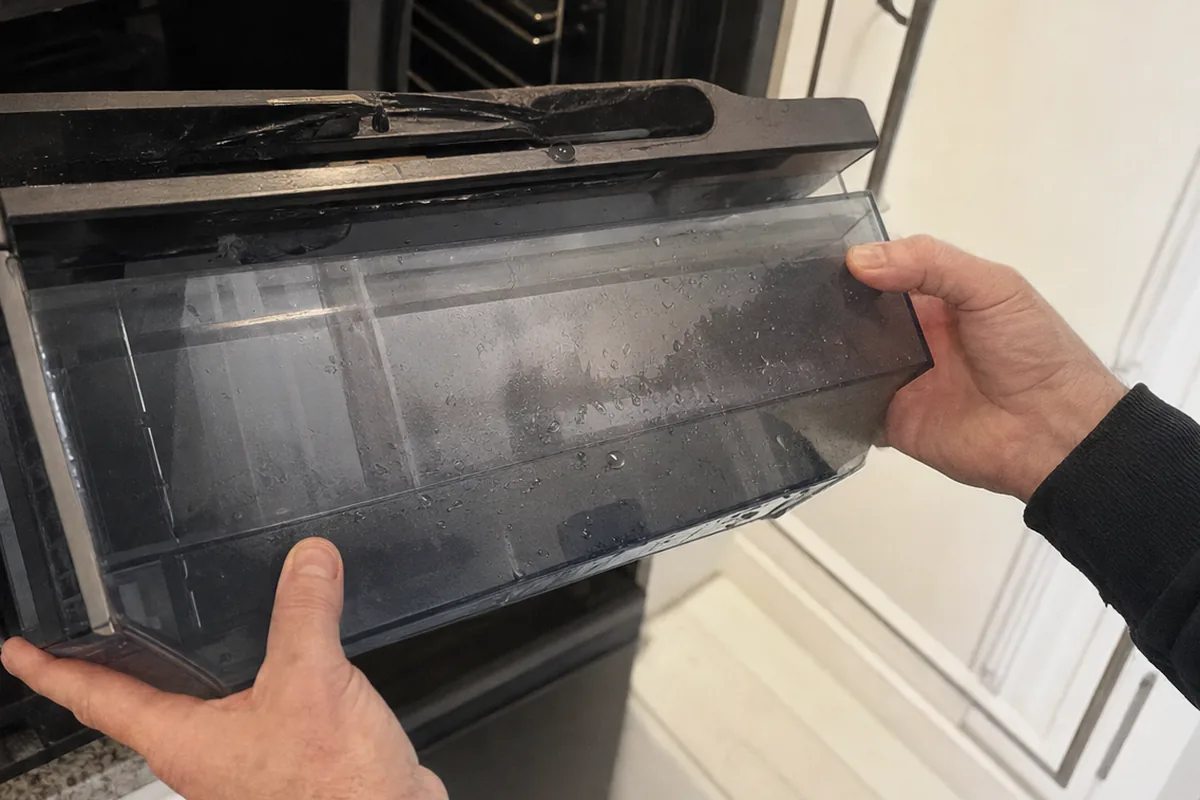
Wolf range hood cleaning: filters, grease cups and the canopy
Most of the work in cleaning a Wolf hood is lifting out the parts that catch grease and putting them through the dishwasher, on a 3-to-6-month rhythm.
-
Installation · Aug 14, 2026
When a modern built-in goes into a cottage cabinet
A wall oven in an opening tighter than its specification runs hot for its entire life. Replacing the board without correcting the opening buys a second failure.
-
Upkeep · Aug 14, 2026
A maintenance calendar for a kitchen at the beach
Coastal wear is not random. It runs on intervals, and the intervals are short. Here is what to do monthly, each season and once a year, and why each item matters.
-
Upkeep · Aug 14, 2026
What goes wrong inside a steam oven's water system
A steam oven is the only appliance in the kitchen that turns tap water into vapour and keeps the residue. Almost every fault it develops starts in that one fact.
-
Salt corrosion · Aug 14, 2026
Tea staining: the brown speckle on beachside stainless
Brown speckle on coastal stainless is chloride sitting on the passive layer, not steel failing. Deal with it early and it comes off; leave it and it pits.
-
Power and boards · Aug 14, 2026
Storm season, salt film and why control boards die
Northeast Florida averages about 68 thunderstorm days a year. Boards rarely die from one dramatic strike — they die from repeated small events plus salt film.
-
Salt corrosion · Aug 12, 2026
Why the hood blower fails before anything else
The blower wheel is the one part of a kitchen that pulls outside air across bare metal every day it runs — which is why it corrodes first in a beach house.
Money, before you book
If a note describes my appliance, what would the repair cost?
These are the bands the work lands in once the fault is known. Every note that ends in a repair ends in one of them.
| What gets replaced or put right | Usual range |
|---|---|
| Igniter or spark module replacement | $210–$550 |
| Burner valve or orifice service | $210–$710 |
| Oven thermostat or temperature sensor | $180–$520 |
| Convection fan or motor | $250–$680 |
| Diagnostic visit, credited to the repair | $80 |
Flat $80 diagnostic covering the visit and the full diagnostic sequence, credited toward the repair once you approve the work. A range rather than one number, because the firm figure is written down after the diagnosis and a range is what you can act on before it. The whole band table →
Questions
Asked about the notes
Are these notes about products to buy?
- No. They are wear patterns from the bench and from beach kitchens: what corrodes first, in what order, and what it means for the appliance in front of you. There are no sponsored write-ups and no manufacturer news, and where a note says to do nothing, that is the recommendation.
How do the notes relate to the repair pages?
- They are wired to each other by subject rather than by hand. A repair page shows the notes that cover its equipment, and each note lists the repairs it touches. If a note describes what your appliance is doing, the repair page it links to sets out how that fault is actually found.
Book a diagnostic
Tell us the model and what it is doing. We come to the island, find the fault, and put the number in writing.
- $80 flat diagnostic, credited toward the repair
- You get a written estimate before any part is ordered or any labor begins.
- 90 days on labor, 365 days on parts
- Mon–Fri 8–6 · Sat 9–4 · Jacksonville Beach and the beaches