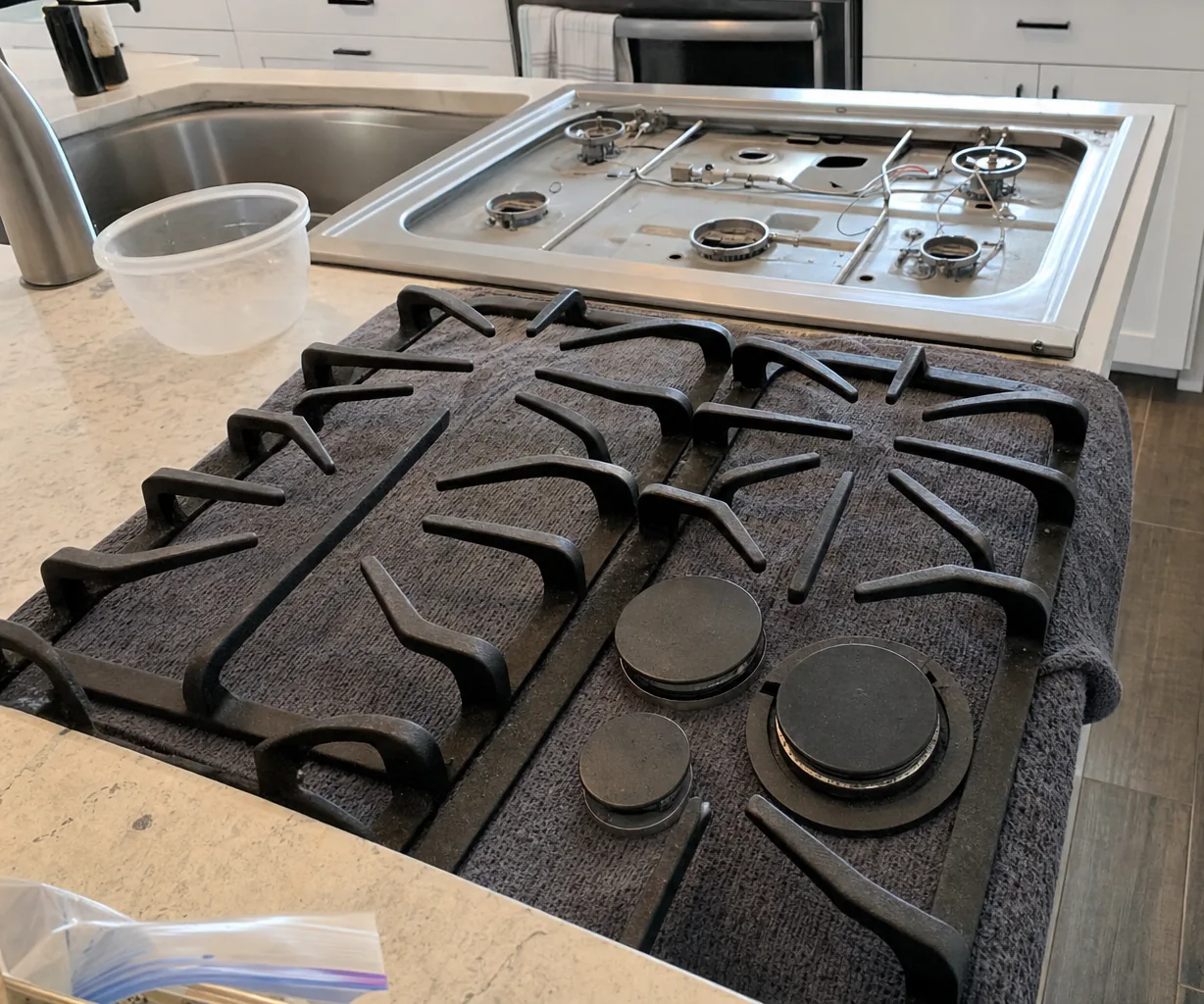
Wolf teppanyaki grill parts are ordered by the model and serial number printed on the unit’s rating plate, not by a photo or a best guess from an online catalog. The home teppanyaki is an electric built-in module: a flat stainless cooking plate, heating elements fixed beneath it, sensors that report plate temperature, the controls and knobs, and the trim that seats the module in the counter. For two years from the day it was installed, Wolf pays for a defective part and the labor to fit it. From then through year five, heating elements and electronic control boards are still covered as parts, but the labor is yours, and where the part comes from starts to matter.
Read the rating plate before you order anything
The use and care guide for your module shows where its rating plate sits. Photograph it. The model tells a parts counter which product family you own; the serial pins it to a production run, which matters because parts get revised and two modules that look identical can take different elements or knobs.
When you register the product, online or through Wolf’s owner app, file the installation date and the dealer’s name with those numbers. Warranty service asks for all four.
Why the parts catalogs you find online may not fit
Searching for a Wolf teppanyaki parts list, diagram or free PDF catalog tends to surface restaurant griddles and commercial parts books carrying the same Wolf name. Those belong to a separate commercial equipment line, and their part numbers do not apply to a residential module. For a home unit, you can download the use and care guide and the installation guide; a full exploded diagram is usually something a technician looks up by serial number.
If your flat surface is a griddle built into a gas range or rangetop, its parts follow that range’s model and serial. That griddle has its own rangetop page.
Genuine parts versus aftermarket
On a teppanyaki, the parts that decide how it cooks are the ones you never see. A replacement element has to match the plate’s wattage and mounting, and a temperature sensor has to read the way the controls expect, or the surface runs hot at one end and lukewarm at the other. Aftermarket listings rarely say which serial range they suit, and a part that is close but not exact can fit perfectly and still cook badly. Genuine OEM parts are built to the same drawing your module came from.
The warranty adds a second reason. During the limited five-year coverage, an owner who hires a technician outside Wolf’s own service network has to get the covered part from Wolf itself, and Wolf will not refund one bought anywhere else. Call Wolf with your numbers before anyone orders.
What the coverage usually hinges on
- Timing. The full two-year coverage runs from the date of original installation, for a part that is defective in materials or workmanship under normal home use.
- Which part failed. In years three to five, electric heating elements and electronic control boards remain covered; most other pieces do not.
- Cosmetics. Defects in the stainless finish are covered for only 60 days, so inspect the plate surround and trim as soon as the installer leaves.
- Location. Coverage applies to residential installations in the fifty US states, the District of Columbia and Canada’s ten provinces.
Jacksonville Beach sits between the Intracoastal Waterway and the Atlantic, so salt air reaches every kitchen in town. Spotting on stainless trim after those first months is a cleaning job, not a claim.
If your teppanyaki is actually on the patio
Some owners call any outdoor flat-top a teppanyaki grill. Wolf’s outdoor gas grills carry model names starting with OG. Their warranty starts with one full year; after that, heating elements, control boards, valves and drip pans get limited cover to year five, and stainless parts get limited lifetime cover that ignores surface corrosion. The serial tag hides above the drip tray behind the logo, so pull the tray out to read it; grill carts have no serial number at all. Ignition faults are covered on our outdoor grill page.
What you can swap yourself and what needs a technician
A cracked knob or a scuffed trim piece is usually a simple swap once you have the right number. If the plate will not heat at all, check the breaker before ordering anything. Elements, sensors, wiring and controls are a different matter: the module runs on a high-voltage circuit and the plate is heavy and seated into the counter. An $80 diagnostic confirms which part has actually failed before money goes on a guess. If the fault turns out to be the control electronics, the typical range is $450–$1,160, and you get the firm figure after diagnosis; our pricing page explains how that works.